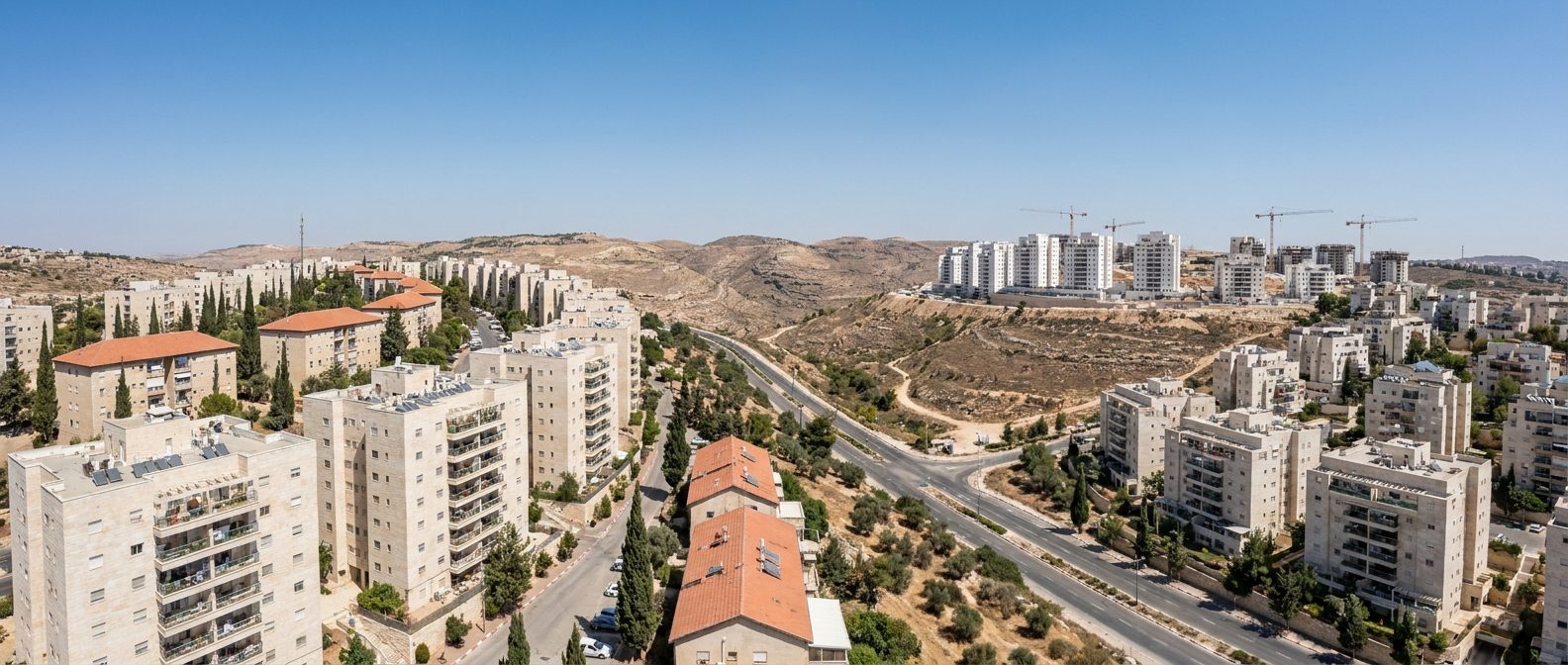
Ramat Beit Shemesh neighbourhoods: Aleph, Bet, Gimmel, Daled and Neve Shamir
Ramat Beit Shemesh is five areas: Aleph, Bet, Gimmel, Daled and Neve Shamir, which agencies also call Hey. Aleph has the most agency offices and the most English-language agency websites; Daled and Neve Shamir are where the new projects are; Bet and Gimmel sit between them in age.
English-speaking buyers usually narrow to two of the five within a week, once they have written down what the family needs. This guide gives you the facts this site can check, what buyers ask about each area, and the list that makes the choice.
The office data comes from this site's ranking: every real estate agency Google Maps lists for the city, placed in an area by the neighbourhood OpenStreetMap returns for its Google pin, read on 15 October 2026. The area pages (Aleph, Bet, Gimmel, Daled, Neve Shamir) list the offices in each one.
The five areas at a glance
| Area | Offices in the ranking | With an English website | Most-reviewed office |
|---|---|---|---|
| Ramat Beit Shemesh Aleph | 11 | 7 | Rimon Realty, 35 reviews |
| Ramat Beit Shemesh Bet | 1 | 1 | HaGefen Realty, 1 reviews |
| Ramat Beit Shemesh Gimmel | 2 | 0 | Eliezer Realty, 348 reviews |
| Ramat Beit Shemesh Daled | 4 | 0 | Sigsug HaNadlan, 237 reviews |
| Neve Shamir (Ramat Beit Shemesh Hey) | 1 | 1 | Gordon Realty, 0 reviews |
| Old Beit Shemesh (Ramat Moshe) | 3 | 0 | Avia Dahan Real Estate, 95 reviews |
One pattern is visible in the addresses themselves. Every Aleph office in the ranking has a street name that starts with Nachal, the Hebrew word for stream: Nachal Nisanim, Nachal Raziel, Nachal Achziv, Nachal Refa'im, Nachal Lachish. When an agent says "a Nachal street", they mean Aleph. The Daled and Gimmel addresses in the ranking carry names of sages and boulevards instead.
What to check in any of the five: housing, shopping, shuls, the commute
The areas differ less in what they offer than in how new it is. Each has residential streets of stone apartment buildings, a shopping center or a commercial strip, and shuls within walking distance; the newer the area, the more of that's still being built. So the useful questions are the same everywhere, and the answers change by street.
- Housing: how old is the building, how spacious are the rooms, and is there a sukkah balcony, an elevator and parking.
- Shopping and amenities: where the nearest shopping center is, and whether it exists yet or is on a plan.
- Community: which shuls are on the block, which rabbi leads them, and whether the street leans Anglo, Israeli, modern orthodox or charedi. Ask the sellers and the neighbours, not the brochure.
- Access and employment: the road link to Route 38, the train from Beit Shemesh station and the buses decide the commute, so ask how long the trip to Jerusalem and Tel Aviv takes from that street at rush hour, not from the city sign.
- Population and growth: a new neighborhood fills fast. Easy Aliyah's line about traffic and infrastructure, quoted below, is the honest version of what "sought-after" means in a city that's still growing.
Who moves here, in the words of the people who write about it
Easy Aliyah, a relocation blog, calls Ramat Beit Shemesh "the undisputed capital of Anglo-religious aliyah in Israel" (source). The same post is frank about the cost of growth: "Traffic and infrastructure have struggled to keep up with the explosive growth." Both lines are worth holding in mind when you compare an established street in Aleph with a new tower in Neve Shamir.
The questions agencies print on their own sites show what buyers ask. Gordon Realty's FAQ includes "What's the difference between RBS Alef, Gimmel, Daled, and Hey?" and "Can I buy property in Ramat Beit Shemesh before making aliyah?" (Gordon Realty). Semerenko Group's asks "Is it advisable to invest in pre-construction properties in areas like RBS D or Neve Shamir?" (Semerenko Group). For many families, those three questions are the decision. Which area? Can we buy from abroad? Is a new project a good idea?
Aleph
Aleph has the most agency offices in this ranking and the most English-language agency websites. The top two agencies on 15 October 2026 both sit on Nachal streets there. If you'd like an agent who can walk you from the office to the apartment, start in Aleph.
Ask about the building's age and the elevator, street parking, and which shul is on the block. The Aleph offices have their own page.
Bet
Bet sits across the valley from Aleph. Only one office in this ranking is placed there, and it has an English website. With so few offices on the ground, a Hebrew portal or a Hebrew-speaking agent may show you more of what's for sale. The Bet office is a starting point.
Gimmel
Gimmel came after Aleph. Its two offices in the ranking have Hebrew websites, and one of them carries the largest Google review count in the city. Gordon Realty's listing filter splits the area into "RBS G1" and "RBS G2", so check which part a listing means before you book a viewing. Both offices are on the Gimmel page.
Daled
Daled is the newest finished section, and agencies name it first for pre-construction projects. Four offices in the ranking sit there, none with an English-language website on 15 October 2026. Gordon Realty gives it its own "RBS D" entry, and Semerenko's FAQ pairs Daled with Neve Shamir.
Here the questions change. Is the apartment finished or on plan? What delivery date does the contract give? Is there an agent fee at all? Adv. Dr. Arik Ariel writes that when an agent shows plans for a new project rather than a specific apartment, "there is no place to sign a commission agreement in this case" (Buyitinisrael). The four offices are listed on the Daled page.
Neve Shamir (Hey)
Neve Shamir is the newest area of the city and is still being built. Agencies list it under both names; Gordon Realty labels one listing "Neve Shamir RBS H, Ramat Beit Shemesh Hey". One office in the ranking sits in Neve Shamir, with an English website.
What to ask in Neve Shamir: the same new-build questions as Daled, plus what's finished today and what's planned. A sales brochure describes the neighbourhood as it will be; your lawyer and your own visit describe it as it is. Its one office is on the Neve Shamir page.
How the city of Beit Shemesh grew, and where the new neighborhoods fit
Beit Shemesh sits about 30 kilometres west of Jerusalem, according to Wikipedia, and takes its name from a Biblical city whose archaeological tell lies just northwest of the modern town. The first transit camp opened in 1950. "When the city was built in the 1950s, it was initially settled by new immigrants" from Iran, Iraq, Romania, Bulgaria, Morocco and Iraqi Kurdistan.
English speakers came in force later. Wikipedia records that "In the 1990s, the city saw a large influx of new immigrants from the former Soviet Union, Ethiopia, and English-speaking countries". Ramat Beit Shemesh grew on the hills beside the old town. Yigal Realty calls Aleph "the first neighborhood built outside of Beit Shemesh". Bet, Gimmel and Daled followed, and Neve Shamir is still going up.
Wikipedia also calls the city "A center of Haredi Judaism and Modern Orthodoxy". That's a reason to ask about the street, not just the area. Which shul is on the block? Where do the children walk to school? Walk it on a Shabbat afternoon before you sign.
The practical checks are the ones you'd make anywhere. Compare living space in sqm, not just rooms. If a garden apartment or a balcony over the valley matters to you, say so early. Time the walk to the supermarket, and time the commute to Jerusalem or Tel Aviv at rush hour.
How to choose between two areas
Daniel Blush, co-owner of Pollack Realty in Jerusalem, described the method to the Jewish Standard: "The first step is finding the right area based on the needs of the person". His list ran: long-term or not, how soon, an elevator, a shul nearby. Here's a longer version to fill in before you call an agent.
| Need | Your answer | Points to an area because |
|---|---|---|
| New build or established street | New: Daled, Neve Shamir. Established: Aleph, Bet, Gimmel | |
| Elevator required | More likely in newer buildings | |
| Sukkah balcony | Ask per building; common in newer stock | |
| Walk to a specific shul or school | Decides the street, not only the area | |
| Move-in date | On-plan apartments have a delivery date in the contract | |
| Agent who works in English | Most English-website offices sit in Aleph | |
| Budget, with the agent fee added | See the fee guide |
With the list filled in, open the ranking, filter by area, and call two agencies. The questions to ask are on their own page.
Questions
What is the difference between RBS Aleph, Gimmel, Daled and Hey?
Mostly age and stage. Aleph is the established core with the most agency offices in this ranking. Gimmel and Daled came later, and Daled is where agencies point buyers for pre-construction projects. Hey is the name agencies use for Neve Shamir, the newest area, still being built.
Is Neve Shamir the same as Ramat Beit Shemesh Hey?
Yes. Agencies use both names for the same area. On this site the area page is called Neve Shamir.
Which area has the most English-speaking agencies?
Aleph, by office count and by English-language websites. The table at the top of this guide shows the count for each area, read on 15 October 2026.
Which area is best for an Anglo family?
The one that matches your list: shul, schools, an elevator, a sukkah balcony, parking, and how new you want the building. No area wins on all of those. Write the list first, then look at two areas, not five.
Are Daled and Neve Shamir still under construction?
Parts of both are. If you buy a new build, ask the agent whether a fee applies when the developer sells direct; the fee guide has the rule.